
 By Tort Law Team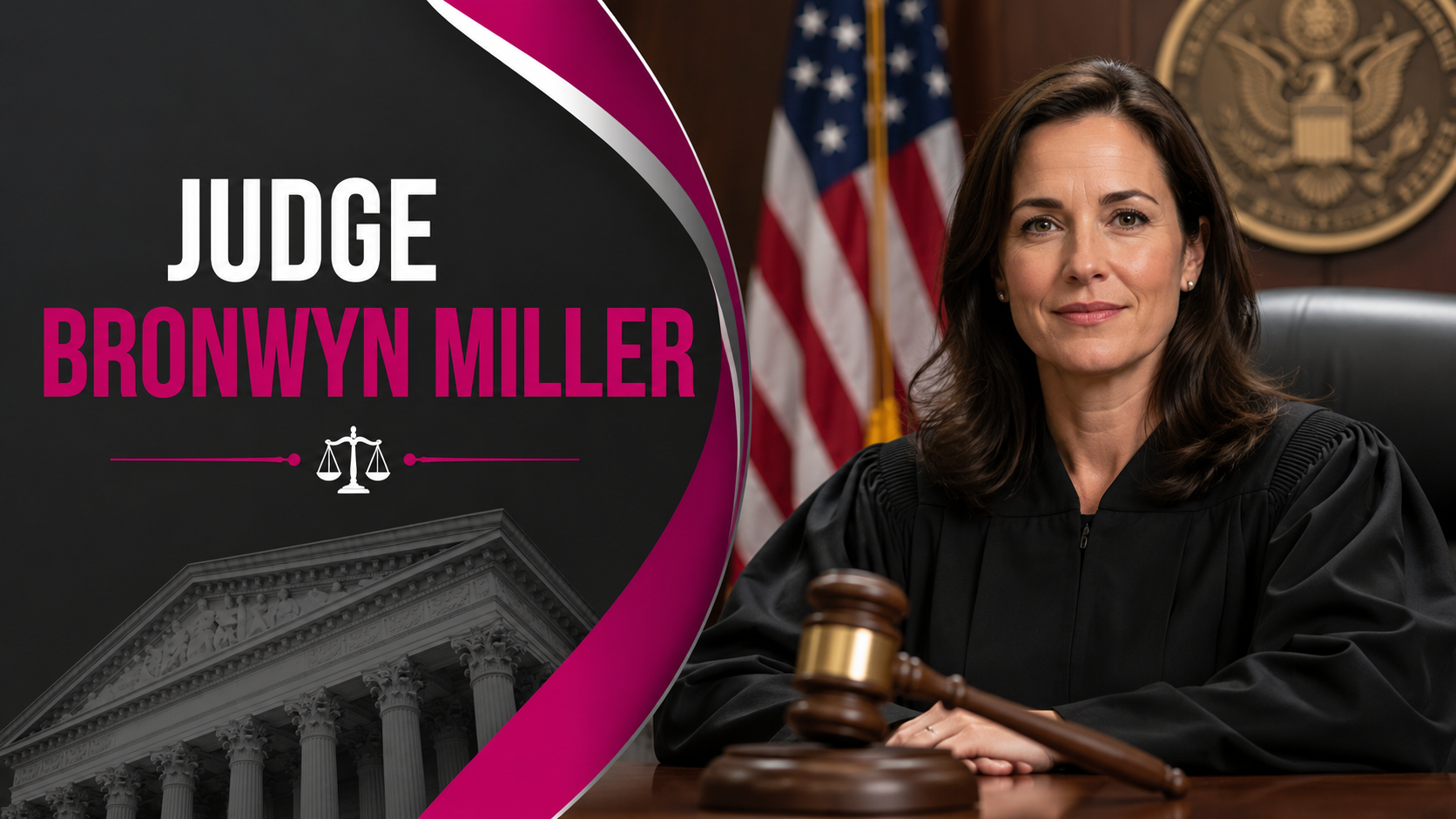
Judge Bronwyn Miller serves as a judge on the Florida Third District Court of Appeal. Her career spans more than 25 years in Florida’s legal system, progressing from prosecutor to trial judge to appellate jurist. This article examines her professional background, notable cases, judicial service, and recent developments, providing context on her contributions and ongoing matters.
Introduction
Judge Bronwyn C. Miller has held positions across multiple levels of Florida’s judiciary, including roles as an assistant state attorney, county court judge, circuit court judge, and appellate judge. Appointed to the Third District Court of Appeal by Governor Rick Scott in 2018, she assumed office in 2019. Her current term ends on January 5, 2027, with a retention election scheduled for November 3, 2026.
Her trajectory reflects a common path in judicial service: starting in prosecution, moving to the bench, and advancing through merit-based appointments and elections. Miller’s work has involved criminal prosecutions, trial-level adjudication, and appellate review. Public interest in her career has intensified due to her involvement in high-profile matters, including the prosecution of Corey Smith in the early 2000s and subsequent disciplinary proceedings related to communications during Smith’s resentencing.
This article provides factual information on her background, key cases, and legal developments for readers seeking clarity on judicial processes in Florida. It separates established facts from ongoing proceedings and includes a standard disclaimer: This article is for informational purposes only and does not constitute legal advice.
Background & Legal Context
Bronwyn C. Miller earned her Bachelor of Arts degree from Barnard College at Columbia University in 1994 and her Juris Doctor cum laude from the University of Miami School of Law in 1997. She began her legal career immediately after law school as an assistant state attorney in the Miami-Dade County State Attorney’s Office under then-State Attorney Katherine Fernandez Rundle.
In that role (1997-2005), Miller advanced to positions including Training Director and Division Chief in the Felony Unit. She attained an AV rating from Martindale-Hubbell, a peer-reviewed recognition of professional skill and ethics. During this period, she prosecuted serious felony cases, including high-stakes gang-related murders amid significant security concerns for witnesses and prosecutors.
Governor Jeb Bush appointed her to the Miami-Dade County Court in 2005. In 2010, Governor Charlie Crist elevated her to the Eleventh Judicial Circuit Court, where she served in the Criminal Division until 2019. Governor Rick Scott appointed her to the Third District Court of Appeal in 2018; she assumed the appellate role in 2019. She has won retention elections, including in 2020.
Florida’s judicial selection process for appellate courts combines gubernatorial appointment with merit-based screening commissions, followed by nonpartisan retention elections. Judges on courts of appeal serve six-year terms and face voters on the question of retention. This system aims to balance independence with accountability.
Beyond courtroom work, Miller has contributed to legal education and scholarship. She has served as an adjunct professor at Florida International University and the University of Miami School of Law. She has taught at judicial conferences and colleges, including the Florida Judicial College. Her publications include articles in the Florida Bar Journal on topics such as the authentication of digital photographs and the admissibility of social media evidence, as well as a piece on prosecutorial ethics.
She holds or has held roles on committees such as the Appellate Court Technology Committee, the Commission on District Court of Appeal Performance and Accountability, and Florida Bar rules committees. These activities demonstrate engagement with procedural improvements in the justice system.
Key Legal Issues Explained
Judge Miller’s career illustrates several core aspects of Florida’s legal framework, including the transition from advocate to neutral arbiter, the handling of post-conviction proceedings, and judicial ethics standards.
Prosecutorial Role and High-Profile Cases: As a prosecutor, Miller participated in cases involving violent crime, gang activity, and witness protection issues. The criminal justice system requires prosecutors to prove guilt beyond a reasonable doubt while complying with discovery obligations and ethical rules under the Florida Rules of Professional Conduct. High-stakes trials often involve security measures and complex evidentiary issues, such as witness credibility and potential incentives.
Judicial Appointments and Responsibilities: Florida circuit courts handle serious felonies and civil matters, while county courts manage misdemeanors and smaller civil cases. Appellate courts like the Third District review trial court decisions for legal error, applying standards of review such as de novo for questions of law and abuse of discretion for certain factual or procedural rulings. Judges must maintain impartiality, as codified in the Florida Code of Judicial Conduct.
Post-Conviction and Resentencing Proceedings: Many of Miller’s notable connections involve evolving capital punishment jurisprudence. Following U.S. Supreme Court and Florida Supreme Court decisions on jury unanimity for death sentences (e.g., Hurst v. Florida and related cases), some previously sentenced defendants received new penalty-phase proceedings. These involve presentation of aggravating and mitigating factors, with specific procedural safeguards.
Judicial Ethics: The Florida Judicial Qualifications Commission (JQC) investigates complaints of misconduct under Article V of the Florida Constitution and the Code of Judicial Conduct. Canons address integrity, impartiality, and avoidance of impropriety. Communications by judges outside official channels can raise questions about appearance of bias, particularly when touching on pending or impending matters. Violations, if found, can lead to sanctions ranging from reprimand to removal, decided ultimately by the Florida Supreme Court.
These principles underscore the balance between judicial independence and public confidence in the courts.
Latest Developments or Case Status
As of mid-2026, Judge Miller faces ongoing disciplinary proceedings before the JQC and Florida Supreme Court (Case SC2025-1663). The matter stems from text messages exchanged in 2024 with State Attorney Katherine Fernandez Rundle during post-conviction and resentencing proceedings in the Corey Smith case, which Miller had prosecuted as an assistant state attorney in 2004.
Corey Smith, associated with the John Doe gang in Liberty City, was convicted in 2004 of multiple murders and sentenced to death in 2005. Following changes in death penalty law requiring unanimous jury recommendations, Smith received a new penalty phase. During those proceedings, issues arose regarding original trial practices, including alleged favors to witnesses. Miller testified as a state’s witness.
The JQC filed formal charges alleging that Miller’s private communications undermined impartiality, demeaned the judicial office, and appeared coercive. Miller has denied violating rules, asserted First Amendment protections for her communications on matters of public safety and her reputation, and moved to dismiss the charges. A presiding judge denied dismissal on certain grounds, and proceedings continue with hearings scheduled.
Miller reported herself to the JQC shortly after the messages became public in November 2024. She maintains her long record of ethical service. The Florida Supreme Court will ultimately determine the outcome. No final resolution had been reached at the time of this article.
Separately, Miller remains on the appellate bench and is eligible for retention in the 2026 election.
Who Is Affected & Potential Impact
Developments involving Judge Miller affect several groups:
- The Public and Crime Victims: High-profile cases like Corey Smith’s highlight tensions between finality of convictions, due process, and evolving constitutional standards on sentencing. Residents of Miami-Dade and Monroe counties (served by the Third District) rely on perceived fairness in appellate review.
- Legal Professionals: Prosecutors, defense attorneys, and judges monitor ethics rulings for guidance on communications and recusal standards. The case raises questions about when former prosecutors on the bench may comment on matters tied to their prior work.
- The Judiciary: Outcomes in JQC proceedings influence public trust and standards for judicial conduct statewide. Retention elections allow voters to weigh a judge’s full record.
- Defendants in the Justice System: Post-conviction relief processes ensure constitutional rights, such as effective assistance of counsel and proper jury instructions, are upheld.
Potential impacts include clarifications on judicial speech boundaries or reinforced emphasis on impartiality. Any sanctions would set precedent, while exoneration would affirm certain private communications.
What This Means Going Forward
Judge Miller’s career exemplifies the progression possible within Florida’s judicial system and the scrutiny that accompanies public service, especially in controversial cases. The ongoing JQC matter underscores the importance of maintaining the appearance of impartiality under Canon 2 of the Code of Judicial Conduct, even in private settings.
For the legal community, it highlights best practices for handling conflicts or perceived biases arising from prior roles. Appellate courts play a critical role in ensuring uniform application of law across trial courts, and judges’ backgrounds can inform but must not improperly influence decisions.
Readers and stakeholders should monitor the Florida Supreme Court’s resolution of the disciplinary case and the 2026 retention election. These events will provide insight into how Florida balances judicial accountability with independence. Broader implications may touch on prosecutorial practices in cold or high-profile cases and witness handling protocols.
Legal observers note that such proceedings, while serious, are part of the self-regulatory mechanisms designed to preserve public confidence without undermining the judiciary’s essential functions.
Conclusion
Judge Bronwyn Miller’s legal career reflects dedication to public service across prosecution, trial adjudication, and appellate review in Florida. Her record includes notable appointments, educational contributions, and handling of serious criminal matters. Recent disciplinary proceedings related to communications in a high-profile post-conviction case remain pending before the Florida Supreme Court, highlighting ongoing tensions in judicial ethics and impartiality standards.
As with any sitting judge, evaluation should consider the full scope of service, procedural fairness, and adherence to ethical rules. The public benefits from transparent information on the judiciary, enabling informed participation in retention processes and civic discourse on the justice system. Staying updated through official court sources remains the most reliable approach for developments in this and similar matters.
Frequently Asked Questions
Who is Judge Bronwyn Miller?
Judge Bronwyn C. Miller is an appellate judge on Florida’s Third District Court of Appeal. She previously served as a Miami-Dade County Court and Circuit Court judge and as an assistant state attorney.
What is the Corey Smith case and Miller’s connection?
Corey Smith was convicted in 2004 of multiple murders linked to gang activity. Miller was part of the prosecution team. Decades later, post-conviction litigation led to a resentencing, during which Miller testified and communicated with the State Attorney.
What are the disciplinary charges against Judge Miller?
The JQC alleges her 2024 text messages to the State Attorney regarding the Smith resentencing violated canons on impartiality, integrity, and propriety. Miller contests the charges and has raised constitutional defenses.
Has Judge Miller been removed from the bench?
No. Proceedings are ongoing, and she continues to serve. Final disposition rests with the Florida Supreme Court.
When is Judge Miller up for retention?
November 3, 2026. Florida appellate judges face nonpartisan retention votes.
Where can I find official information on Judge Miller?
Sources include the Third District Court of Appeal website, Ballotpedia, and Florida court records for public dockets.