
 By Tort Law Team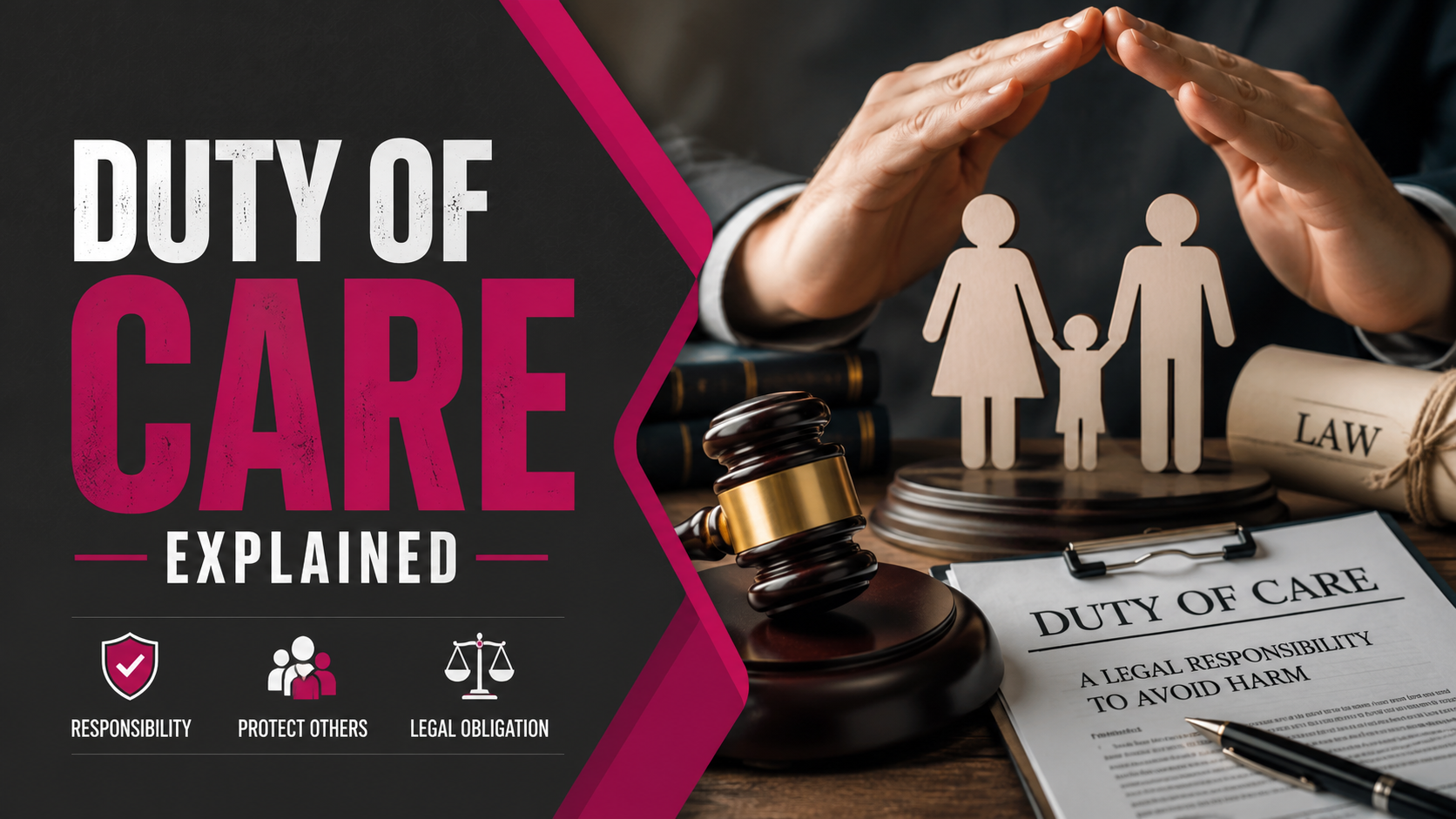
Imagine this scenario: A warehouse worker slips on an unmarked wet floor, suffers a serious back injury, and the company faces a costly lawsuit. Or consider a remote employee experiencing severe burnout because leadership ignored repeated warnings about excessive workloads. These situations highlight why understanding duty of care matters for every business leader and HR professional.
Duty of care explained forms a cornerstone of tort law and negligence law. It requires individuals and organizations to act reasonably to avoid harming others. For employers, this means creating safe workplaces, managing risks effectively, and meeting legal obligations that protect employees, customers, and the public.
In this guide, you will discover the fundamentals of duty of care, its application in the workplace, practical steps to fulfill it, and strategies to minimize legal liability. Whether you run a small business or manage corporate teams, these insights will help you navigate obligations confidently and prevent negligence claims.
What Is Duty of Care in Tort Law?
Duty of care refers to the legal obligation to exercise reasonable caution to prevent foreseeable harm to others. It originates primarily from common law principles in tort law, where courts determine if a relationship creates this responsibility.
The landmark case Donoghue v Stevenson (1932) established the modern foundation. In that ruling, a manufacturer owed a duty to consumers who might be affected by its products, even without a direct contract. This “neighbor principle” expanded liability beyond immediate parties to anyone who could reasonably be foreseen as affected by one’s actions.
In the United States, duty of care varies somewhat by state but follows similar logic. Courts ask: Did the defendant owe a duty to the plaintiff under the circumstances? If yes, did they breach it, causing actual harm?
Standard of care describes the level of caution expected. It often uses the reasonable person standard: What would an ordinary, prudent individual do in the same situation? For professionals like doctors or engineers, the bar rises to the reasonable professional in that field.
Duty of care vs standard of care explained: Duty establishes whether an obligation exists. Standard defines how to meet it. A breach of duty occurs when actions (or inactions) fall below this expected level, leading to legal liability.
Duty of Care for Employers: Core Obligations
Employers face heightened responsibilities because of the special relationship with employees. This includes providing a safe work environment, adequate training, and proper equipment.
In the United States, the Occupational Safety and Health Administration (OSHA) enforces key rules through its General Duty Clause. This clause requires employers to furnish a workplace “free from recognized hazards that are causing or are likely to cause death or serious physical harm.” It applies even when no specific regulation covers a hazard.
Key employer obligations include:
- Conducting regular risk assessments to identify potential dangers.
- Providing safety training and personal protective equipment (PPE).
- Maintaining facilities, machinery, and tools in good condition.
- Addressing workplace violence, harassment, and mental health concerns.
- Supporting employees during business travel or remote work.
Failing these duties can result in citations, fines, lawsuits, and reputational damage.
Duty of care explained for employers extends beyond physical safety. It covers psychological well-being, especially post-pandemic. Ignoring signs of stress or failing to accommodate disabilities may constitute a breach.
Breach of Duty of Care: What It Looks Like and Its Consequences
What is a breach of duty of care? It happens when someone fails to meet the required standard, and that failure causes harm.
Common workplace examples:
- Ignoring a known slippery floor without warnings or cleanup.
- Failing to repair faulty machinery that injures an operator.
- Not providing adequate training for hazardous tasks.
- Overlooking reports of bullying or unsafe conditions.
- Sending employees to high-risk areas without proper precautions or support.
Consequences can include civil lawsuits for negligence, workers’ compensation claims, OSHA penalties, and even criminal charges in extreme cases. Courts evaluate factors such as foreseeability of harm, the severity of potential injury, and the burden of taking preventive measures.
Recent cases often involve mental health or remote work risks, showing how duty of care evolves with society. For instance, employers who disregarded clear warnings about extreme workloads have faced liability for employee harm.
How to Fulfill Duty of Care in the Workplace: Practical Steps
Fulfilling your duty does not require perfection. It demands reasonable, proactive efforts. Here is a step-by-step approach:
- Perform Thorough Risk Assessments: Regularly evaluate your premises, processes, and employee activities. Involve staff for real-world insights. Document everything.
- Develop Clear Policies: Create and communicate written safety policies. Update them as laws or operations change.
- Provide Training and Resources: Offer ongoing education tailored to roles. Ensure accessibility for all employees, including remote workers.
- Implement Monitoring and Reporting Systems: Encourage open reporting of hazards without fear of retaliation. Act promptly on concerns.
- Maintain Documentation: Keep records of assessments, training sessions, incidents, and corrective actions. This proves diligence in court.
- Address Special Situations: For business travelers, use risk intelligence tools and emergency protocols. For mental health, provide access to support programs.
Corporate duty of care requirements also include compliance with state and federal laws, such as those from the EEOC for discrimination and harassment prevention.
Leaders who integrate these practices reduce risks and boost morale. Employees who feel protected are more productive and loyal.
Risk Assessment and Management Strategies
Effective risk assessment sits at the heart of duty of care. Start by identifying hazards: physical (slips, machinery), chemical, biological, ergonomic, and psychosocial.
Use tools like checklists, audits, and employee surveys. Prioritize risks by likelihood and severity. Then, control them through elimination, substitution, engineering controls, administrative measures, or PPE.
For larger organizations, consider third-party audits or technology solutions for real-time monitoring. In global operations, account for location-specific threats like political instability or natural disasters.
Employee safety improves when risk management becomes part of company culture, not just a compliance checkbox.
Duty of Loyalty and Other Related Concepts
While duty of care focuses on avoiding harm, duty of loyalty (often in corporate or fiduciary contexts) requires acting in the best interests of the organization or clients. Directors and officers owe both duties. Breaches here can involve self-dealing or misuse of information.
In employment, employees also have duties, such as following safety rules and reporting issues. Mutual responsibilities strengthen overall compliance.
Real-World Scenarios and Lessons
Consider a retail store where a manager knows about a broken step but delays repairs. A customer falls and sues successfully for negligence. The store could have avoided this with timely action.
Or picture a tech company that fails to address excessive overtime complaints. An employee suffers health issues and claims constructive dismissal or negligence. Proactive workload management and wellness checks could prevent this.
These stories show that small oversights lead to big liabilities. Learning from them helps you apply principles practically.
Common Pitfalls to Avoid
- Assuming compliance with minimum standards is enough. Courts expect reasonableness based on known risks.
- Poor documentation that makes it hard to prove due diligence.
- Ignoring evolving risks, such as those from hybrid work or new technologies.
- Inadequate training for supervisors on recognizing mental health issues.
- Failing to update policies after incidents or law changes.
Stay informed through resources like OSHA.gov and legal professionals.
Building a Culture of Care
Beyond legal requirements, embracing duty of care ethically builds trust. Train leaders to model safe behaviors. Recognize employees who prioritize safety. Regularly review and improve your programs.
This approach not only mitigates legal liability but also enhances recruitment, retention, and performance.
Conclusion
Duty of care explained reveals a powerful framework for protecting people and your organization. From tort law foundations to daily workplace applications, understanding breach of duty, standard of care, and proactive strategies equips you to prevent harm and claims.
Prioritize regular risk assessments, clear policies, thorough training, and open communication. These steps fulfill obligations while demonstrating genuine commitment to workplace health and safety.
For personalized advice tailored to your industry or situation, consult a qualified employment attorney or legal expert. Taking action today safeguards your team and business tomorrow.
FAQs
What is the reasonable person standard in duty of care?
It is the level of care an average, prudent person would exercise in similar circumstances. Courts use it to evaluate whether actions met the expected standard.
How does OSHA’s General Duty Clause relate to duty of care?
It requires employers to address recognized serious hazards even without a specific regulation, reinforcing the broader duty to maintain safe workplaces.
Can employees be held to a duty of care?
Yes. Employees must follow safety protocols, use provided equipment, and report hazards. Mutual duties support a safer environment.
What should I do if I suspect a breach of duty in my organization?
Document evidence, report internally through proper channels, and seek legal counsel. Prompt action can limit damage.
Does duty of care cover mental health?
Yes. Employers must address foreseeable psychological risks, such as chronic stress or harassment, through support measures and accommodations.
How often should risk assessments occur?
At least annually, plus after significant changes, incidents, or new operations. More frequent checks benefit high-risk industries.
Where can I find reliable resources on duty of care?
Visit OSHA.gov for workplace standards, Cornell Law’s Legal Information Institute for tort law explanations, and consult state-specific labor departments.
You May Also Like: Elements of Negligence: How to Prove Fault in Personal Injury Claims