
 By Tort Law Team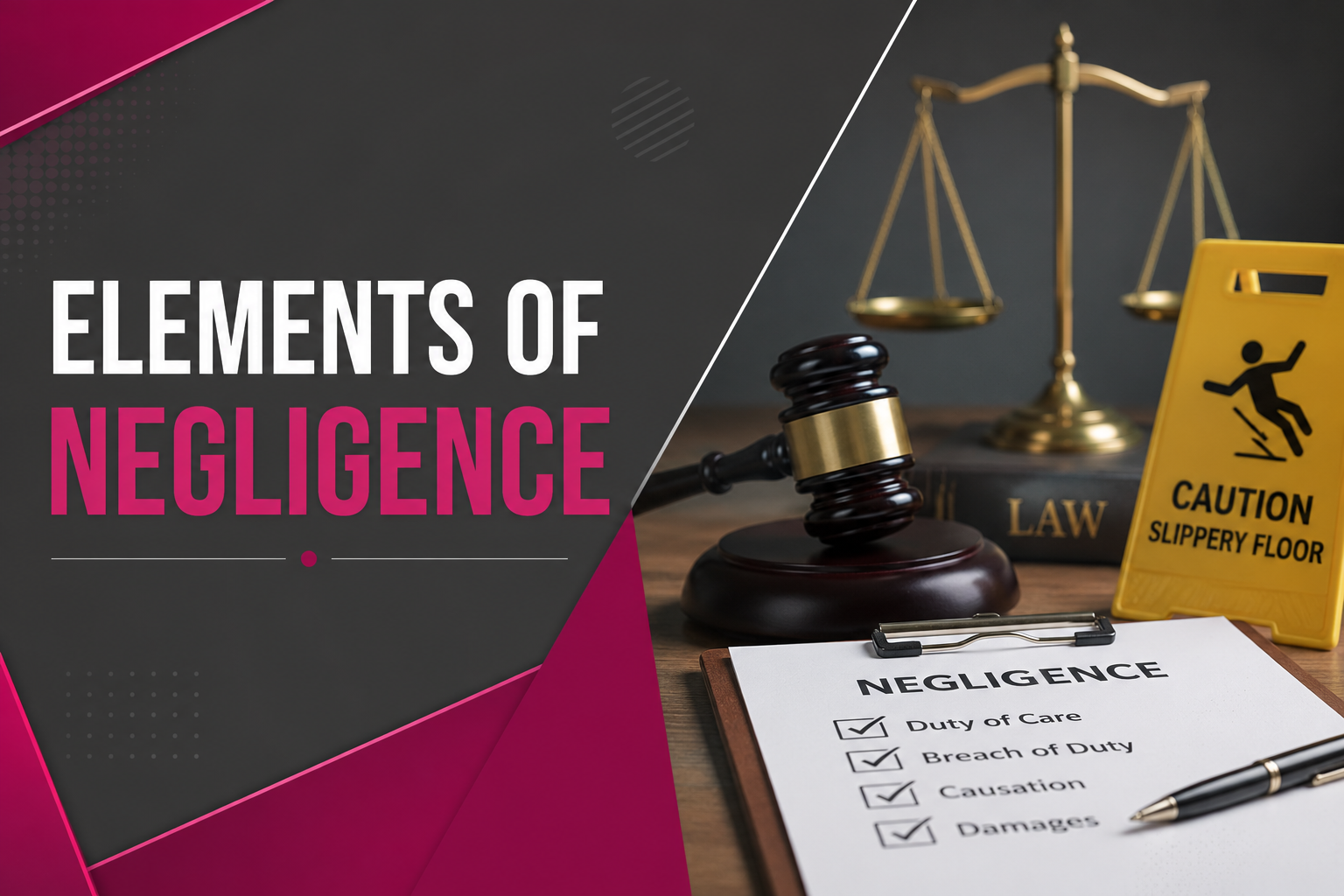
Understanding the elements of negligence is the key to holding the at-fault party accountable in a personal injury case.
This guide breaks down the core components needed to prove fault in negligence claims. Whether you have been injured in a car accident, slip and fall, or medical situation, these principles apply across most personal injury cases in the United States. We explain each element in plain language, with real-world examples, practical tips, and insights to help you navigate the process confidently. While this information educates and empowers you, it is not a substitute for personalized legal advice. Consulting an experienced attorney remains essential.
What Is Negligence in Tort Law?
Negligence forms the foundation of many personal injury claims. It occurs when someone fails to exercise the level of care that a reasonable person would in similar circumstances, resulting in harm to another. Unlike intentional wrongs, negligence involves carelessness rather than deliberate harm.
In a personal injury case, proving negligence requires satisfying four key elements of negligence: duty of care, breach of duty, causation, and damages. Courts generally require plaintiffs to prove these by a preponderance of the evidence (more likely than not). Missing even one element typically dooms the claim.
These principles stem from common law and vary slightly by state, but the core framework remains consistent. For instance, drivers owe a duty to others on the road, property owners to visitors, and doctors to patients.
Why does this matter to you? If another party’s carelessness caused your injury or property damage, recognizing these elements helps you evaluate your options and build a stronger case.
Also Read: What Is Negligence in Tort Law? Everything You Need to Know
The Four Elements of Negligence Explained
1. Duty of Care: Did the Defendant Owe You a Legal Duty?
The first element is establishing that the defendant owed a duty to the plaintiff. A legal duty or duty of care means the defendant had an obligation to act reasonably to avoid harming others.
Courts determine duty based on the relationship between the parties and foreseeability of harm. Common examples include:
- Drivers owing a duty to obey traffic laws and drive safely.
- Doctors owing a professional duty to provide competent medical care.
- Property owners owing a duty to maintain safe premises for lawful visitors.
Not every relationship creates a duty. For example, a stranger generally has no duty to rescue another unless a special relationship exists. Judges often decide duty as a matter of law early in a case.
Real-world scenario: A store owner knows about a spilled liquid but fails to clean it promptly. Shoppers are foreseeable invitees, so the owner owes them a duty to keep the premises reasonably safe.
2. Breach of Duty: Did the Defendant Fail to Meet the Standard of Care?
Once duty is established, the next step is proving breach of duty. This happens when the defendant fails to act as a reasonably prudent person would under the same circumstances.
The standard is objective: What would an average person with similar knowledge and skills do? In professional cases like medicine, it is the standard of care accepted in that field.
Breach of duty of care examples:
- A driver texting while driving instead of paying full attention.
- A property owner ignoring a known hazard like broken stairs.
- A doctor failing to order necessary tests despite clear symptoms.
Evidence for breach often includes witness statements, video footage, police reports, expert testimony (especially in medical cases), or safety regulations. Jurors compare the defendant’s actions to the expected standard.
3. Causation: Did the Breach Cause Your Injuries?
Causation links the breach directly to the harm. It has two parts: cause-in-fact (actual cause) and proximate cause (legal cause).
Cause-in-fact uses the “but for” test: But for the defendant’s breach, would the injury have occurred?
Proximate cause asks whether the harm was a foreseeable result of the breach. Courts limit liability to consequences that are not too remote.
Proving causation and damages in negligence often requires medical records, expert witnesses, and timelines showing the connection. Challenges arise with pre-existing conditions or multiple potential causes.
Example: A distracted driver rear-ends you, causing whiplash. Medical evidence shows the collision directly led to your injury, and such harm is a foreseeable outcome of distracted driving.
In medical negligence claims, experts must testify that the breach more likely than not caused the worsened outcome.
4. Damages: Did You Suffer Actual Harm?
The final element requires proof of damages — real, compensable harm. Without damages, there is no viable claim even if the other elements exist.
Damages fall into categories:
- Economic damages: Medical bills, lost wages, property repair costs.
- Non-economic damages: Pain and suffering, emotional distress, loss of enjoyment of life.
- Punitive damages (rare in pure negligence): To punish egregious conduct.
Documentation is crucial: bills, pay stubs, photos of injuries, and expert projections for future losses.
How to Prove the Elements of Negligence in a Personal Injury Case
Building a successful claim involves gathering strong evidence for each element. Here is a practical step-by-step approach:
- Seek immediate medical attention — This creates records linking injuries to the incident.
- Document the scene — Photos, videos, witness contacts, and official reports.
- Preserve evidence — Avoid altering your vehicle or property; keep all communications.
- Consult an attorney early — Statutes of limitations (often 1-3 years, varying by state and claim type) can bar late claims. Recent changes, such as Florida’s reduction to two years for many negligence claims post-2023, highlight the urgency.
- Work with experts — Accident reconstructionists, medical professionals, or economists strengthen causation and damages.
Elements of negligence in personal injury cases succeed when evidence clearly ties the defendant’s actions to your losses. Attorneys often use investigation firms and discovery processes to uncover key facts.
Elements of Medical Negligence Claims
Medical malpractice is a specialized form of negligence. The elements of a medical negligence claim mirror the general four but with heightened standards.
- Duty: Established by the doctor-patient relationship.
- Breach: Deviation from accepted medical standards, often proven by expert testimony.
- Causation: The breach must be a substantial factor in the injury (not just a bad outcome).
- Damages: Additional harm beyond the original condition.
Common cases involve misdiagnosis, surgical errors, or medication mistakes. These claims are complex and frequently contested, so specialist attorneys are vital.
Common Pitfalls to Avoid When Pursuing a Negligence Claim
- Delaying action: Evidence fades, memories blur, and deadlines pass.
- Sharing details on social media: Posts can undermine your case.
- Failing to follow medical advice: This can reduce claimed damages.
- Underestimating comparative negligence: Many states reduce or bar recovery if you share fault (e.g., modified comparative systems).
- Settling too early: Insurance companies may offer low amounts before full damages are known.
Real-World Examples and Legal Precedents
Consider a slip-and-fall in a grocery store where staff ignored a spill. Duty exists for invitees, breach via failure to clean, causation if the fall directly injured the plaintiff, and damages via medical costs. Similar cases often settle or go to verdict based on surveillance footage.
In car accidents, running a red light typically satisfies all elements easily. High-profile verdicts in recent years, including multi-million dollar awards for severe injuries from trucking negligence, show juries’ willingness to compensate significant harms.
Building Confidence: Next Steps After an Injury
Understanding the elements of negligence empowers you to ask informed questions and recognize a strong claim. Gather evidence promptly, track all expenses, and seek professional guidance.
Many attorneys offer free consultations and work on contingency, meaning no upfront fees. Internal resources like state bar associations or Cornell Law’s Legal Information Institute provide additional reliable information.
Conclusion
Proving fault in a personal injury claim hinges on clearly establishing the elements of negligence: duty, breach, causation, and damages. These requirements ensure accountability while preventing frivolous lawsuits. By recognizing how they apply to your situation — whether a car crash, medical error, or premises liability incident — you gain clarity and confidence.
Do not navigate this alone. Consult a qualified personal injury attorney to evaluate your specific facts and pursue the compensation you deserve. Early action protects your rights and maximizes recovery.
Frequently Asked Questions
What are the four elements of negligence?
Duty of care, breach of duty, causation, and damages. All must be proven for a successful claim.
How do you prove breach of duty of care?
Compare the defendant’s actions to what a reasonable person would do, using evidence like eyewitness accounts, experts, or regulations.
Can I still recover if I was partly at fault?
It depends on your state’s comparative negligence rules. Many states reduce damages by your percentage of fault; some bar recovery over 50% or 51%.
What is the difference between negligence and medical negligence?
Medical negligence applies the same elements but requires expert testimony on professional standards of care.
How long do I have to file a negligence claim?
Statutes of limitations vary by state and claim type, often 1-3 years. Check promptly as exceptions exist.
Do I need a lawyer for a negligence case?
While possible to handle small claims yourself, complex cases benefit greatly from an attorney’s experience in evidence gathering, negotiation, and litigation.
What types of damages can I recover?
Economic (medical costs, lost wages) and non-economic (pain and suffering). Punitive damages are rarer and require more egregious conduct.