
 By Tort Law Team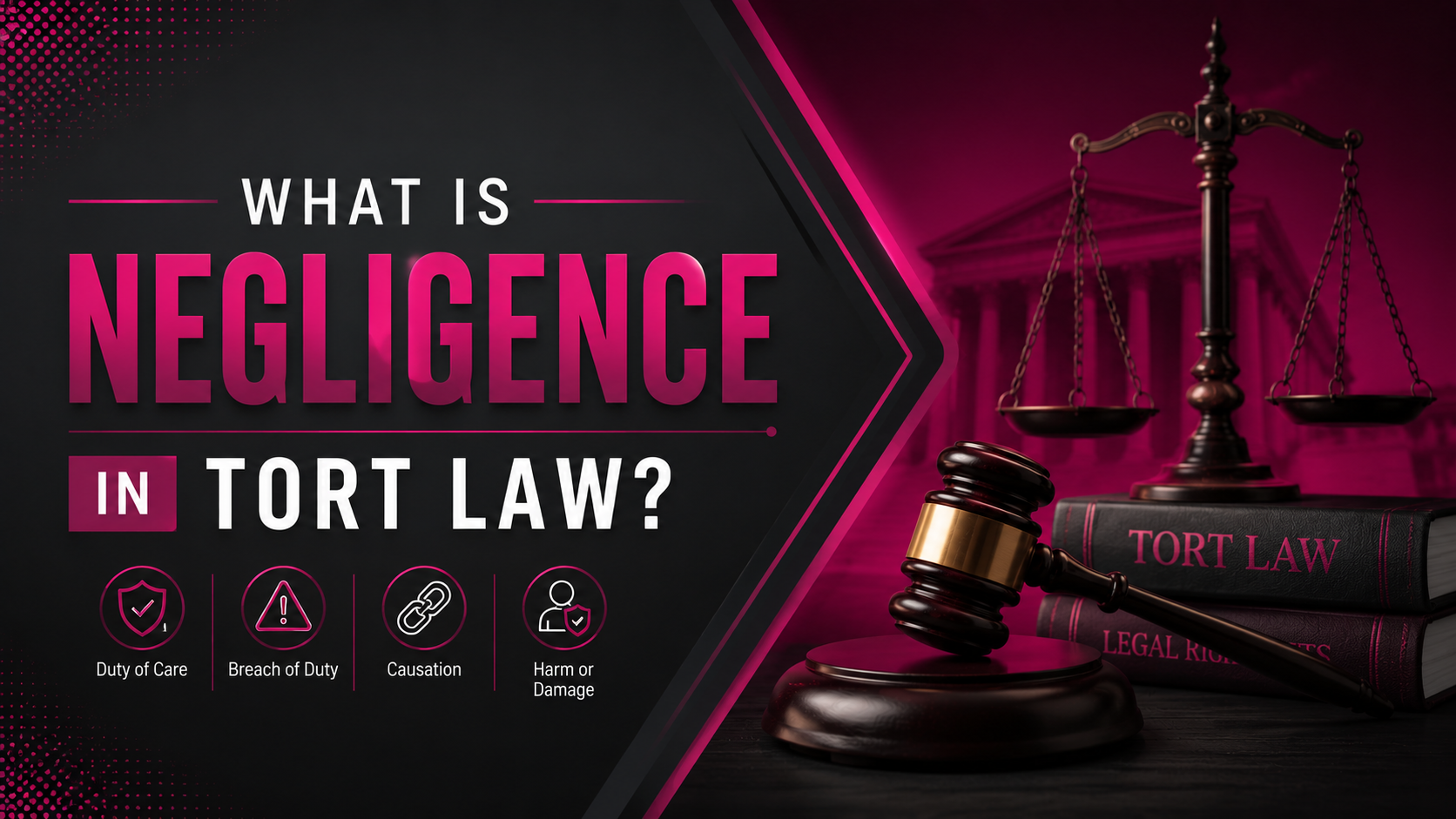
Negligence represents one of the most common and foundational concepts in tort law. It arises when an individual or entity fails to exercise the level of care that a reasonable person would under similar circumstances, resulting in harm to another.
This article explains the core principles of negligence, its legal elements, real-world applications, and implications for those involved in disputes. Courts across jurisdictions, including the United States and the United Kingdom, routinely address negligence claims in personal injury cases, medical malpractice, and premises liability matters. Understanding these principles helps individuals recognize their rights and responsibilities in everyday situations.
This article is for informational purposes only and does not constitute legal advice. Readers facing specific circumstances should consult qualified legal counsel.
Background and Legal Context
The modern law of negligence developed primarily through common law decisions. In the United Kingdom, the landmark case Donoghue v Stevenson (1932) established the “neighbour principle,” which holds that individuals must take reasonable care to avoid acts or omissions that they can reasonably foresee would likely injure their “neighbours” — those closely and directly affected by their actions.
This principle influenced tort law in many common law jurisdictions, including the United States. American courts have built upon similar foundations, emphasizing the reasonable person standard and the need to balance foreseeability of harm against the burden of preventing it.
Tort law itself serves several purposes: compensating victims for losses, deterring careless conduct, and establishing societal standards for reasonable behavior. Negligence claims differ from intentional torts (such as assault or battery) because they involve unintentional but avoidable harm stemming from a failure to meet an expected standard of care.
Legislatures and courts have refined negligence doctrines over time through statutes (such as those governing motor vehicle operation or professional licensing) and judicial precedents. Procedures typically begin with a plaintiff filing a civil complaint in the appropriate court, followed by discovery, potential motions for summary judgment, settlement negotiations, trial, and possible appeals.
Key Legal Issues Explained
To succeed in a negligence claim, a plaintiff must generally prove four primary elements: duty of care, breach of duty, causation, and damages. Some formulations expand this to five elements by separating causation into “cause in fact” and “proximate cause.”
Duty of Care
Duty refers to the legal obligation to act (or refrain from acting) in a manner that avoids causing foreseeable harm to others. Courts determine whether a duty exists based on the relationship between the parties and the circumstances. For example, drivers owe a duty to other road users to operate vehicles safely, and property owners owe duties to visitors regarding hazardous conditions.
The scope of duty often considers foreseeability: whether a reasonable person could anticipate that their conduct might harm someone in the plaintiff’s position.
Breach of Duty
Breach occurs when the defendant fails to meet the applicable standard of care. The standard is typically that of the “reasonable person” — an objective benchmark that does not account for the defendant’s personal limitations unless special circumstances (such as professional expertise) apply.
In professional negligence cases, such as medical malpractice, courts apply the standard of a reasonably competent professional in that field. Evidence of breach may include witness testimony, expert opinions, accident reports, or industry guidelines.
Causation
Causation links the breach to the plaintiff’s harm. It has two main components:
- Cause in fact (often called “but-for” causation): The harm would not have occurred but for the defendant’s breach.
- Proximate cause (or legal cause): The harm must have been a foreseeable consequence of the breach, not too remote or attenuated.
Courts evaluate intervening events and whether the chain of causation remains intact.
Damages
The plaintiff must demonstrate actual harm or loss resulting from the breach. This can include physical injuries, property damage, medical expenses, lost wages, pain and suffering, and other economic or non-economic losses. Without provable damages, a negligence claim typically fails.
Types of Negligence and Common Examples
Negligence manifests in various contexts:
- Motor vehicle accidents: Distracted driving, speeding, or failure to yield.
- Premises liability: Slip-and-fall incidents due to untreated hazards on property.
- Medical negligence: Failure to diagnose, improper treatment, or surgical errors by healthcare providers.
- Product liability: In some cases, negligence in design, manufacturing, or warnings contributes to claims alongside strict liability theories.
Comparative or contributory negligence doctrines may apply when the plaintiff also bears some responsibility. Many jurisdictions use comparative fault systems that apportion damages based on each party’s percentage of fault, while a few retain stricter contributory negligence rules that can bar recovery if the plaintiff is even slightly at fault.
Latest Developments and Case Status
Negligence law continues to evolve through court decisions addressing emerging issues such as autonomous vehicles, cybersecurity responsibilities, and professional standards in remote services. Jurisdictions periodically review and update rules on duty, causation, and damage caps through legislation and appellate rulings.
For the most current information on specific cases or statutory changes, consult official court records or regulatory resources from bodies such as state supreme courts or the American Law Institute, which publishes influential Restatements of Torts.
Who Is Affected and Potential Impact
Negligence claims impact a wide range of parties:
- Individuals: Accident victims seeking compensation for injuries.
- Businesses and professionals: Those facing liability for employee actions, product defects, or service failures.
- Insurers: Entities managing claims and setting premiums based on risk assessments.
- Public institutions: Governments or agencies subject to negligence suits under applicable waivers of sovereign immunity.
Outcomes can include monetary awards, changes in policies or practices, and broader effects on insurance markets or regulatory oversight. Successful claims provide redress to injured parties, while defenses or limitations protect against unwarranted liability.
What This Means Going Forward
Negligence principles reinforce the importance of reasonable conduct in daily life and professional activities. Courts balance individual accountability with practical limits on liability to avoid imposing undue burdens.
Stakeholders should monitor developments in areas such as emerging technologies, healthcare standards, and tort reform efforts. Businesses may benefit from risk management practices, training, and insurance coverage. Individuals can protect themselves by understanding basic duties and documenting incidents promptly.
Legal standards may vary by jurisdiction, and procedural requirements (such as statutes of limitations) are strictly enforced. Staying informed through reputable legal sources supports better decision-making in potential disputes.
Conclusion
Negligence remains a central pillar of tort law, providing a framework for addressing harm caused by careless conduct while promoting standards of reasonable behavior. By requiring proof of duty, breach, causation, and damages, the legal system ensures claims rest on verifiable foundations rather than speculation.
As society and technology evolve, negligence doctrines adapt through legislative and judicial processes. Affected individuals and organizations benefit from understanding these principles, documenting facts carefully, and seeking timely professional guidance when disputes arise. Staying informed about legal developments supports compliance, risk mitigation, and informed participation in the justice system.
Frequently Asked Questions
What is negligence in tort law?
Negligence in tort law is the failure to exercise reasonable care that a prudent person would under similar circumstances, resulting in harm to another. It forms the basis for many civil claims seeking compensation.
What are the four (or five) elements of negligence?
The primary elements are:
1) duty of care owed by the defendant to the plaintiff.
2) breach of that duty.
3) causation linking the breach to the harm.
4) actual damages. Some analyses separate causation into factual and proximate components.
How does negligence differ from other torts?
Unlike intentional torts, negligence involves unintentional conduct that falls below the reasonable care standard. It also differs from strict liability, which does not require proof of fault.
Can you sue for negligence if you were partly at fault?
It depends on the jurisdiction. Comparative negligence systems often allow partial recovery reduced by the plaintiff’s fault percentage. Contributory negligence jurisdictions may bar recovery entirely in some cases.
What types of damages are available in negligence cases?
Compensatory damages cover economic losses (medical bills, lost income) and non-economic losses (pain and suffering). Punitive damages are rare in pure negligence cases and typically require egregious conduct.
How long do you have to file a negligence claim?
Statutes of limitations vary by jurisdiction and claim type, often ranging from one to several years from the date of injury or discovery. Exceptions may apply in cases involving minors or latent injuries.