
 By Tort Law Team
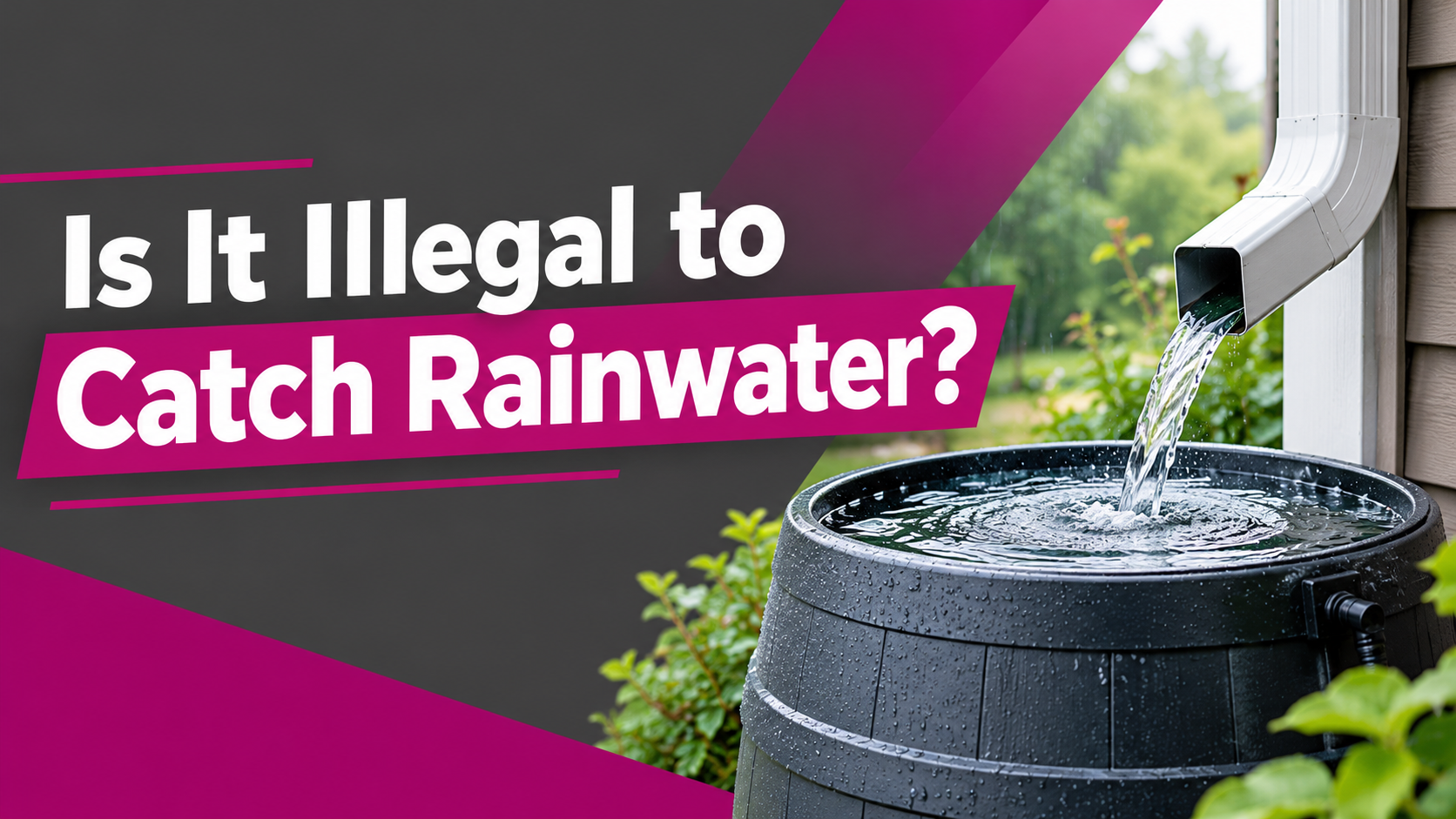
You’ve probably heard the claim: catching rainwater is illegal. A neighbor mentions it, a social media post warns about it, or an old article makes it sound like the government owns every drop that falls on your roof. The truth is far more reassuring.
Rainwater harvesting is legal in every U.S. state. Most places place zero limits on a basic rain barrel setup. A few states set volume caps or registration rules, and local codes or HOAs can add practical requirements. This guide clears up the myths, breaks down the rules by state, explains water rights in plain language, and shows you how to set up a compliant system for water conservation, lower bills, and sustainable outdoor use.
Why the Myth Exists and Why It Persists
The idea that it is illegal to catch rainwater comes mostly from Western water law. In prior appropriation states, the first person to put water to beneficial use gains a senior right. Early regulators sometimes treated rooftop collection as an unauthorized diversion that could affect downstream users.
Modern research and legislation changed that view. Studies showed that ordinary residential barrels have negligible impact on streams. Colorado, once the strictest example, passed House Bill 16-1005 in 2016 to allow limited residential collection. Utah and Nevada followed with clear exemptions. Today the federal government has no ban, and the U.S. Environmental Protection Agency supports rainwater capture as a stormwater management and low-impact development practice.
The myth lingers because water rights language is technical and because a few states still set clear volume or use limits. For a homeowner with one or two standard barrels, those limits almost never create a barrier.
How Rainwater Harvesting Works and Common Terms
Rainwater harvesting (also called rainwater catchment or collection) means capturing precipitation from a roof or other surface, storing it, and using it later. Most residential systems start simple: a downspout, a screen or first-flush diverter, and a covered barrel or cistern.
Key terms you will see:
- Rain barrels: Usually 50–100 gallon containers placed under downspouts. Ideal for gardens and outdoor watering.
- Residential cisterns: Larger tanks (hundreds to thousands of gallons) that can supply non-potable irrigation or, with proper treatment and approvals, limited indoor uses.
- Non-potable irrigation: Watering plants, lawns, or gardens with untreated collected rain. This is the most common and least regulated use.
- Water rights: Legal entitlements to use water. In prior appropriation states these rights are prioritized by date of claim.
- Stormwater management: Techniques that slow, filter, or reuse runoff to reduce flooding and pollution.
Collected rain is generally soft and free of the minerals found in municipal or well water, which makes it excellent for plants. It is not automatically safe to drink. Roof debris, bird droppings, and atmospheric pollutants can enter the system, so potable use requires filtration, disinfection, and often local health department approval.
The Legal Landscape at a Glance
No state makes ordinary residential rainwater collection a crime. The practical picture falls into three groups:
- Unrestricted for residential use: The large majority of states. You can install rain barrels or modest cisterns with no state volume cap or registration.
- Encouraged with incentives: Several states and many cities offer tax credits, sales tax exemptions, or rebates for equipment. Texas, California, Arizona, Virginia, and parts of Florida and Maryland stand out.
- Limited volume or registration: Colorado, Utah, and Nevada maintain the clearest statewide conditions. A handful of other states require permits only for large systems or for connection to indoor plumbing.
Local municipal codes, building departments, and homeowners associations can still regulate placement, aesthetics, mosquito control, or structural safety. Always check those layers before buying a large tank.
States with Notable Restrictions
These three states receive the most questions, so the rules deserve clear detail.
Colorado
Under House Bill 16-1005, single-family homes and multi-family buildings with four or fewer units may use up to two rain barrels with a combined capacity of 110 gallons. Collection must come from the rooftop. The water may be used only outdoors on the same property for non-potable purposes such as watering lawns, plants, or gardens. The barrels must have sealable lids.
No state permit is required within these limits. Larger collection is possible in limited cases for certain exempt-well owners under a separate Division of Water Resources permit. Colorado State University Extension provides clear guidance on these rules.
Utah
Utah Code 73-3-1.5 allows collection and beneficial use on the same parcel. Without registration you may use no more than two covered containers, each holding 100 gallons or less. With free online registration through the Utah Division of Water Rights you may store up to 2,500 gallons total. Registration is simple and takes only a few minutes. Use remains limited to the same parcel.
Nevada
Nevada Revised Statutes 533.027 exempts the de minimis collection of precipitation from the rooftop of a single-family dwelling for nonpotable domestic use. No water-right permit is required for that ordinary residential activity. The water must stay on the property. Larger or commercial systems fall under standard water rights rules.
Oregon and Washington leave standard rain barrels unrestricted. They may require water-right permits only for large cisterns that effectively divert surface water beyond typical residential scale.
The Rest of the 50 States
In the remaining states the pattern is consistent: residential rooftop collection for outdoor non-potable use faces no statewide volume limit or registration requirement. Local building, plumbing, and stormwater rules still apply, especially if you plan indoor connections or very large storage.
Fully open for basic residential systems (no statewide volume cap or registration for ordinary rain barrels): Alabama, Alaska, Arizona, Arkansas, California, Connecticut, Delaware, Florida, Georgia, Hawaii, Idaho, Illinois, Indiana, Iowa, Kansas, Kentucky, Louisiana, Maine, Maryland, Massachusetts, Michigan, Minnesota, Mississippi, Missouri, Montana, Nebraska, New Hampshire, New Jersey, New Mexico, New York, North Carolina, North Dakota, Ohio, Oklahoma, Pennsylvania, Rhode Island, South Carolina, South Dakota, Tennessee, Texas, Vermont, Virginia, West Virginia, Wisconsin, and Wyoming.
Many of these states actively promote the practice. Texas law prevents HOAs from banning rainwater collection systems. California’s Rainwater Capture Act of 2012 clarified that landowners may install systems for specified purposes without a state water-right permit for the capture itself. Arizona, New Mexico, and Virginia offer or have offered financial incentives. Extension services and water utilities across the country publish free design guides and sometimes sell discounted barrels.
Even in “open” states, connecting a cistern to household plumbing or treating water for drinking usually triggers plumbing-code, cross-connection, and health-department requirements. Those rules protect the public water supply and public health; they are not bans on collection.
Water Rights, Watershed Protection, and Why Limits Exist
Western states generally follow the doctrine of prior appropriation: “first in time, first in right.” Eastern states more often follow riparian principles tied to land ownership along a watercourse. In both systems the state has an interest in orderly allocation and watershed protection.
Early concerns treated rooftop runoff as potential streamflow that senior rights holders might claim. Research later showed that the volume captured by typical home barrels is tiny compared with natural and urban runoff. Legislatures responded by creating explicit, limited exemptions. The Colorado and Utah statutes are the clearest examples of this compromise: allow homeowner use while preserving the overall water-rights framework.
Stormwater management goals also favor collection. Capturing roof runoff reduces peak flows into storm drains, lessens urban flooding, and keeps pollutants out of waterways. Many municipal codes now treat rain barrels and cisterns as approved best-management practices.
Do You Need a Permit for Rain Barrels?
For a standard residential rain barrel (or two) the answer is almost always no at the state level. Colorado’s 110-gallon limit and Utah’s small-container exemption require no permit. Nevada’s de minimis exemption likewise needs none.
Permits or registrations appear in these situations:
- Exceeding Colorado’s 110-gallon or Utah’s 2,500-gallon thresholds.
- Installing large cisterns in Oregon or Washington that may be treated as water diversions.
- Connecting the system to indoor plumbing or a public water supply (cross-connection control and plumbing permits).
- Building codes that govern foundation loads, setbacks, or electrical components for pumps.
- Local stormwater or zoning ordinances that treat large tanks as structures.
Always contact your city or county building department and your water utility before installing anything beyond simple barrels. A five-minute call can prevent later problems.
How to Legally Harvest Rainwater at Home: Practical Steps
- Confirm state and local rules. Use the summaries above, then check your state water resources agency and local building department.
- Choose the right scale. Start with one or two covered 50–55 gallon barrels. They fit under most downspouts, cost little, and stay well within every state’s limits.
- Install safely. Use a solid base so the full barrel cannot tip. Add a screen or mesh lid to exclude mosquitoes and debris. Include an overflow hose that directs excess water away from the foundation.
- Consider a first-flush diverter. It discards the initial dirty runoff so cleaner water enters storage.
- Use the water outdoors. Non-potable irrigation of gardens, trees, and lawns is the simplest, lowest-risk application.
- Maintain the system. Empty or use the water regularly, clean screens, and inspect for leaks. In freezing climates drain barrels before hard freezes.
- Scale up carefully. If you want a large cistern, document your local approvals and, where required, complete Utah-style registration or any needed water-right paperwork.
Many extension services publish free plans and calculators that estimate how many gallons your roof can yield from a given rainfall.
Benefits of Residential Rainwater Catchment Systems
A well-designed system delivers practical and environmental gains:
- Lower water bills, especially during dry summers when outdoor watering dominates household use.
- Healthier plants. Soft rainwater lacks the chlorine and salts found in many municipal supplies.
- Reduced stormwater runoff and less strain on municipal systems.
- Greater resilience during watering restrictions or short-term supply interruptions.
- Contribution to eco-friendly sustainability goals without large infrastructure.
Homeowners who track usage often report noticeable savings after the first full season of consistent collection.
Common Pitfalls to Avoid
- Assuming a statewide “open” status means local rules do not apply. HOAs and cities can still set aesthetic or placement rules.
- Using untreated water for drinking or cooking. Roof-collected water needs proper treatment for potable use.
- Ignoring mosquitoes. Open or poorly screened barrels become breeding sites. Use tight lids and screens.
- Overlooking foundation and drainage. Overflow must be directed safely.
- Installing a large system without checking plumbing codes if you plan any indoor connection.
- Treating historical restrictions as current law. Colorado’s pre-2016 rules no longer apply to qualifying rain barrels.
Conclusion
Is it illegal to catch rainwater? No. Every state allows residential collection in some form. Most impose no volume limits on ordinary rain barrels. Colorado, Utah, and Nevada set clear, manageable conditions that still let homeowners capture useful amounts for outdoor use. The rest of the country treats the practice as a normal property right, and many places actively encourage it through incentives and stormwater programs.
You can start small, stay compliant, and enjoy the benefits of free water for your garden and landscape. Check your local building department and any HOA rules, then place a covered barrel under a downspout. That simple step puts you on the right side of the law in every state.
For personalized advice on a larger system or indoor use, contact your state water resources agency or a licensed professional familiar with local codes.
Frequently Asked Questions
Is it illegal to collect rainwater in my state?
No. Collection is legal in all 50 states. A few states set volume or registration limits; most do not.
Do you need a permit for rain barrels?
Almost never for standard residential barrels. Permits or registration apply mainly to systems that exceed Colorado’s 110-gallon limit, Utah’s 2,500-gallon registered limit, or large cisterns in certain states.
What are the rainwater collection volume limits by state?
Colorado: 110 gallons combined in two barrels. Utah: 200 gallons without registration or 2,500 gallons with free registration. Nevada: no fixed gallon limit for qualifying single-family rooftop collection for nonpotable use. All other states: no statewide residential volume cap for ordinary systems.
Can my HOA ban rain barrels?
Some HOAs try. Texas law specifically prevents HOAs from prohibiting collection systems. Elsewhere the answer depends on state law and the exact covenant language. Many states treat reasonable aesthetic rules as allowed but complete bans as problematic.
Is collected rainwater safe to drink?
Not without treatment. Roof runoff can contain debris, bacteria, and pollutants. Use it for non-potable irrigation unless you install proper filtration, disinfection, and obtain any required health approvals.
How much water can I realistically collect?
A 1,000-square-foot roof can yield roughly 600 gallons from one inch of rain (accounting for losses). Actual results depend on rainfall patterns, roof material, and system efficiency.
What if I want a large cistern or indoor use?
Contact your local building and health departments. Plumbing codes, cross-connection rules, and sometimes water-right permits come into play for bigger or potable systems.
You May Also Like: Nissan Recalls Engine Failure: Is Your Car Safe?