
 By Tort Law Team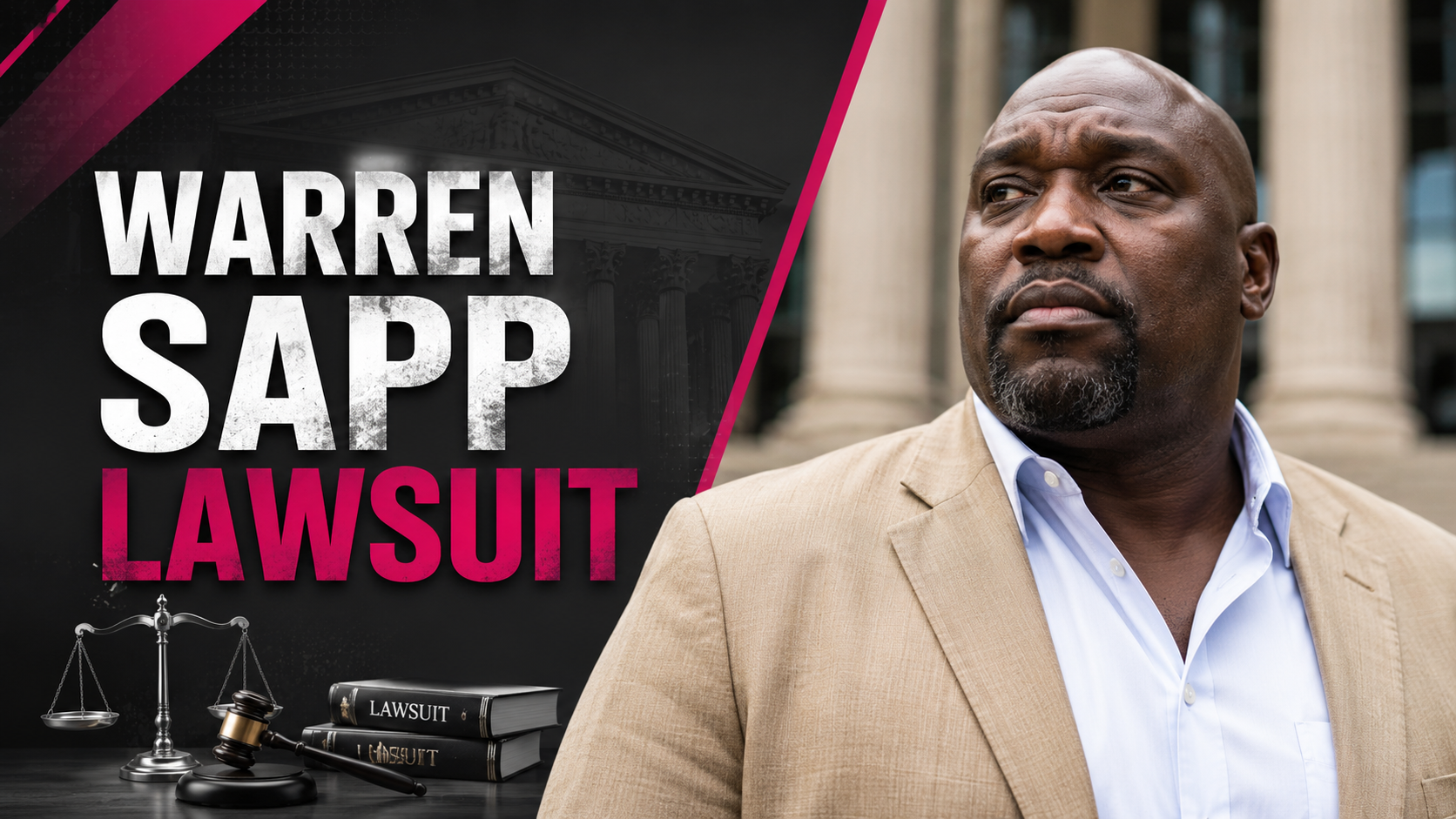
High-profile athletes sometimes face situations that test more than their skills on the field. In February 2024, NFL Hall of Famer Warren Sapp found himself at the center of a traffic stop in Okeechobee County, Florida, that quickly escalated into an arrest. What followed was a swift dismissal of charges and a notice of claim seeking $20 million in damages. This article breaks down the Warren Sapp lawsuit, the events of that day, the legal arguments involved, and how the episode intersects with his career as a Tampa Bay Buccaneers legend and later Colorado Buffaloes assistant coach.
Readers will find a clear timeline, explanations of the civil rights claims, the role of the state attorney’s decision, and the broader context for sports fans and those following police accountability issues. The goal is straightforward education on the facts as reported through public records, body camera references, and official statements.
Background on Warren Sapp’s Career and Public Profile
Warren Sapp built a reputation as one of the most dominant defensive tackles in NFL history. Selected by the Tampa Bay Buccaneers in the first round of the 1995 draft, he spent the bulk of his 13-year career there before finishing with the Oakland Raiders. He earned multiple Pro Bowl selections, All-Pro honors, and a Super Bowl XXXVII ring with the Buccaneers. Induction into the Pro Football Hall of Fame cemented his status as an NFL Hall of Famer.
After retirement, Sapp worked as a television analyst before later joining the coaching ranks. In 2024 he joined Deion Sanders’ staff with the Colorado Buffaloes, initially in a quality control and graduate assistant capacity focused on the defensive line and pass rush. The timing of the Florida incident overlapped with background checks and the early stages of that coaching role. Fans of the Buccaneers, Raiders, and Buffaloes followed the story closely because it involved both a celebrated player and questions about lawful police interaction during a public event.
Sapp has participated for years in charity convoys featuring high-end vehicles traveling across Florida to raise funds. The February 24, 2024, event fit that pattern and provided the setting for the encounter with the Okeechobee Sheriff’s Department.
What Happened on February 24, 2024
Deputies in Okeechobee County received multiple calls about luxury and high-end vehicles traveling at high speeds, with some reports citing speeds over 100 mph and near collisions. One vehicle was stopped at a gas station after radar indicated approximately 63 to 65 mph in a 35 mph zone. The driver was from New Jersey.
Equipment problems complicated the stop. The deputy’s printer failed, delaying the citation process. A crowd of an estimated 50 to 100 people from the convoy gathered. Warren Sapp was among the bystanders and began speaking with the deputy about the stop, including questions about the recorded speed.
Body camera footage and the arrest report describe Sapp engaging verbally. Deputies ordered him to stop and informed him he was obstructing the traffic stop. Sapp responded that obstruction requires a physical act and that his comments constituted protected free speech. He asked for badge numbers and, when asked for his name, indicated he does not answer questions. Deputies then handcuffed him.
According to the narrative, the crowd chanted “set him free” as Sapp was placed in a patrol vehicle. He was transported to the Okeechobee County Jail, booked on a charge of obstruction without violence (also referenced as resisting without violence), held for roughly three hours, and released after posting a $750 cash bond.
Key points from later review include the absence of a pat-down or frisk after restraints were applied. Sapp’s attorney later argued that a proper search would have located his identification, potentially altering the need for transport and booking. The arrest report initially referred to an “unidentified black male” before identifying Warren Carlos Sapp.
Charges Dropped by the State Attorney
Days after the arrest, Assistant State Attorney Ashley Albright reviewed the matter. In a memo obtained through public records, Albright stated that while Sapp’s actions and statements were “frustrating and annoying to the point of distracting the deputies,” the strict requirements of the law would not support a conviction beyond a reasonable doubt. The charges were dismissed. This decision forms a central pillar of the subsequent civil claim: the official finding that the arrest lacked sufficient legal foundation under the applicable statute.
Florida law on obstruction without violence (typically under statute addressing resisting, obstructing, or opposing an officer without violence) requires more than verbal criticism or presence near a stop. Courts have distinguished protected speech and observation from physical interference or refusal that actually hinders lawful duties. The state attorney’s assessment that the evidence fell short of the criminal threshold directly supports Sapp’s position that the detention was unlawful.
The Notice of Claim and $20 Million Demand
In December 2024, attorney Ariel Mitchell filed a notice of claim with Okeechobee County and the Okeechobee Sheriff’s Department. Florida law generally requires this step before a formal lawsuit against a government entity, followed by a waiting period (often six months) under sovereign immunity rules. The notice alleges that deputies maliciously and falsely arrested and illegally detained Sapp, violating his civil rights.
The claim seeks $20 million in damages. Reported components have included estimates for future medical expenses, loss of wages, and aggregate damages covering emotional distress, reputational harm, and related impacts. Sapp’s legal team has described effects such as disrupted sleep and negative impact on a family birthday. The notice also references race, officer ego, and alleged lack of knowledge of constitutional limits as contributing factors.
The Florida Sheriff’s Risk Management Fund, which provides liability coverage for many Florida sheriff’s offices, offered $3,500 in connection with the incident. Sapp’s attorney rejected the amount as inadequate. As of early 2025 reporting, the county had not provided a substantive response beyond the insurance offer, and the formal lawsuit window opened after the statutory waiting period.
This sequence explains why coverage often refers to the “Warren Sapp lawsuit” or “Warren Sapp $20 million lawsuit” even when the initial document is a notice of claim. The practical effect is the same: a high-stakes civil rights action against the agency.
Internal After-Action Report Findings
An internal after-action review by the Okeechobee Sheriff’s Department, obtained via public records, acknowledged that “several things” could have been handled differently. Lieutenant Bryan Lowe’s review highlighted multiple procedural issues:
- Equipment readiness: Supervisors should ensure printers and laptops function before vehicles are issued. When equipment fails, options include handwriting a citation or issuing a verbal warning rather than prolonging the stop.
- Verbal commands: Neither deputy gave a clear command informing Sapp that he was interfering with the traffic stop or directing him to step away. Instructions were limited to “stop.”
- Duration of interaction: Once a citation process is complete and explained, continued argument or interaction can convert a lawful stop into an unlawful continuation, risking exclusion of subsequent evidence or actions.
- Pat-down procedure: After placing Sapp in restraints, deputies did not conduct a required pat-down or frisk for weapons. The review noted this step is standard for officer safety and could have located identification, potentially changing the outcome.
These admissions do not constitute a formal concession of liability. They do, however, provide contemporaneous documentation of training and procedural shortfalls that strengthen arguments about unreasonable seizure and failure to follow department policy.
Legal Grounds: Wrongful Arrest and Civil Rights Claims
Civil claims of this type typically proceed under 42 U.S.C. § 1983 for constitutional violations or parallel state tort theories. Common elements include:
- False arrest / unlawful seizure: Absence of probable cause for the obstruction charge, supported by the state attorney’s dismissal.
- Illegal detention: The period of handcuffing, transport, and jail time without adequate legal basis.
- First Amendment considerations: Verbal questioning of police activity, requests for badge numbers, and assertion of free speech rights during a public encounter.
- Emotional distress and reputational harm: Documented personal and professional disruption, including timing relative to a new coaching background check.
- Municipal liability: Potential failure to train or supervise regarding obstruction standards, equipment protocols, and crowd management during public events.
Florida is not a general “stop and identify” state for bystanders. A person who is not the subject of a lawful investigative detention or arrest generally has no obligation to provide identification. The claim emphasizes that Sapp was not permitted to retrieve identification from his pocket and that deputies did not search him after restraints were applied.
Similar cases involving athletes or public figures often turn on body camera footage, the precise sequence of commands, and whether verbal engagement alone meets the statutory definition of obstruction. The combination of the dropped charges, the after-action findings, and available video places this matter in a category where settlement pressure or trial exposure can be significant for the agency and its insurer.
Impact on Sapp’s Coaching Role with the Colorado Buffaloes
The arrest occurred as Sapp was transitioning into a role on Deion Sanders’ Colorado Buffaloes staff. He has publicly described calling Sanders shortly after release from jail because his background check was still pending. The uncertainty of possible lingering charges created anxiety about the opportunity. Once charges were dropped, the professional path continued. Sapp worked with the defensive line and later held a pass-rush coordinator title during his time in Boulder.
For Colorado Buffaloes fans and followers of Sanders’ program, the episode illustrated how off-field legal developments can create temporary friction even when resolved favorably. Sapp has framed the matter as larger than personal recovery, stating an intention to direct a portion of any recovery toward victim advocates and individuals who lack resources to pursue similar records requests or legal challenges.
Broader Context: Police Accountability and High-Profile Encounters
Cases involving well-known athletes draw attention to everyday questions of free speech near police activity, the definition of obstruction, and the practical consequences of equipment or training gaps. Public records requests for body camera footage, dispatch logs, and internal reviews have become standard tools for accountability. Sapp’s attorney noted the effort required to obtain materials, including travel for large files that could not be emailed.
The Okeechobee Sheriff’s Department has declined detailed comment while the matter remains in litigation posture. County commission meetings in 2025 featured public comment from both supporters of Sapp and residents concerned about potential taxpayer costs. These exchanges underscore the tension between individual civil rights claims and local government budgets funded by risk-management pools.
Current Status and Possible Outcomes
As of the most recent detailed public reporting, the notice of claim process has advanced through the required waiting period. Formal litigation, if pursued, would involve discovery of all body camera video, training materials, and policy documents. Potential resolutions range from negotiated settlement above the initial $3,500 offer to a jury trial on liability and damages. Courts evaluate the objective reasonableness of the officers’ actions under the circumstances known at the time, balanced against the constitutional protections at issue.
No criminal conviction resulted. The civil process focuses on compensation for the detention and its effects rather than further criminal exposure.
Conclusion
The Warren Sapp lawsuit centers on a February 2024 encounter in Okeechobee County that began as a traffic stop during a charity convoy and ended with an arrest for obstruction without violence. The state attorney’s rapid dismissal, the internal acknowledgment of procedural shortcomings, and the $20 million notice of claim against the Okeechobee Sheriff’s Department form the core of the dispute. For fans of the Tampa Bay Buccaneers legend, Oakland Raiders tenure, and Colorado Buffaloes staff under Deion Sanders, the episode highlights both personal resilience and larger questions of lawful policing.
Key takeaways include the importance of clear commands, functional equipment, proper search procedures after restraint, and the legal distinction between protected speech and criminal obstruction. Anyone facing a similar detention should document the interaction, seek counsel promptly, and understand the notice-of-claim requirements that apply to government entities in Florida.
If you or someone you know has questions about civil rights claims arising from an arrest, consult a qualified attorney experienced in Section 1983 litigation or state tort claims against law enforcement. Public records and body camera evidence often prove decisive.
Frequently Asked Questions
What is the Warren Sapp lawsuit about?
It is a civil claim seeking $20 million from Okeechobee County and its Sheriff’s Department for alleged false arrest, illegal detention, and civil rights violations stemming from a February 24, 2024, incident during a charity convoy.
Why were the charges against Warren Sapp dropped?
Assistant State Attorney Ashley Albright determined that the evidence did not meet the strict legal requirements for a conviction on obstruction without violence beyond a reasonable doubt, even though the statements were described as frustrating to deputies.
Is Florida a stop-and-identify state?
No. Bystanders who are not the subject of a lawful detention or arrest generally have no obligation to provide identification. This distinction is central to the claim that Sapp’s refusal to answer questions did not justify arrest.
What did the internal report say about the arrest?
The after-action review identified several areas that could have been handled differently, including equipment readiness, clarity of verbal commands, duration of post-citation interaction, and the failure to conduct a pat-down after restraints were applied.
How does this affect Sapp’s coaching career?
The arrest occurred while background checks for a Colorado Buffaloes role under Deion Sanders were pending. Charges were dropped quickly, and Sapp continued in coaching positions with the program for a period thereafter.
What damages are claimed in the $20 million figure?
The notice references civil rights violations, emotional distress, reputational harm, and related losses. Specific breakdowns cited in coverage have included future medical expenses, wage loss, and aggregate damages.
Has a formal lawsuit been filed?
A notice of claim was filed in December 2024 as required under Florida law. The waiting period for filing a formal complaint against the government entity has since elapsed, allowing litigation to proceed if pursued.
You May Also Like: Dr. Kevin Sadati Lawsuit: Court History and Facts