
 By Tort Law Team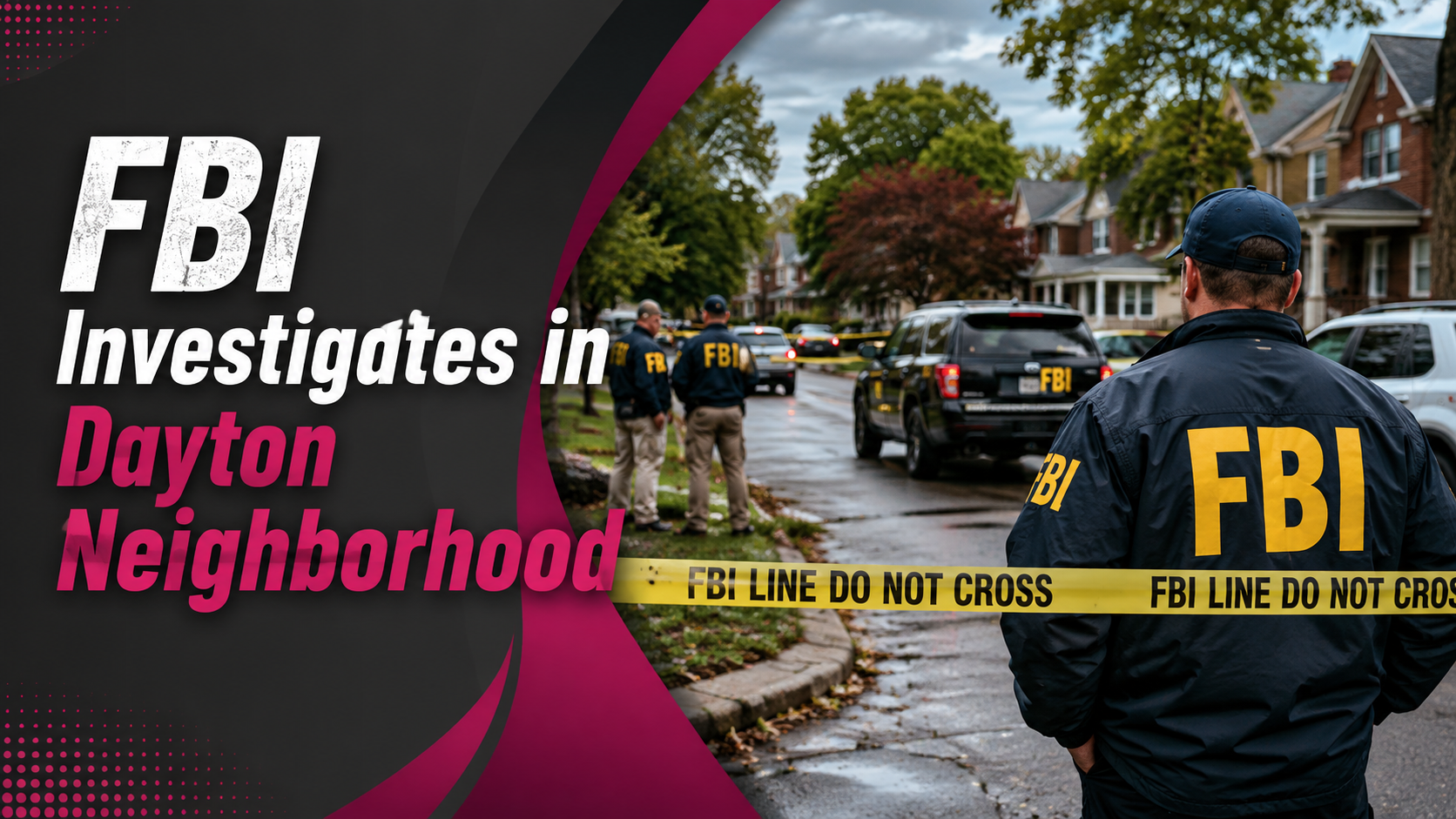
If you live near Ostrander Drive, Sylvan Drive, or in Butler Township, you’ve likely seen it firsthand: unmarked vehicles, agents in tactical gear, and a street suddenly closed off. When the FBI investigates in Dayton neighborhood, it raises immediate questions for residents. What’s happening? Is my family safe? And what does “court-authorized law enforcement activity” actually mean?
This guide breaks down confirmed events, explains the legal terminology federal agents use, and gives you practical steps for navigating a federal law enforcement presence in your community.
What Actually Happened in Dayton
In early July 2025, federal agents were confirmed at multiple Dayton-area locations. According to a spokesperson for the FBI’s Cincinnati Field Office, agents and local law enforcement partners conducted court-authorized law enforcement activity at:
- The 400 block of Ostrander Drive (Avenue) in Dayton’s Eastern Hills neighborhood, around 1:30 p.m. on July 7, 2025
- The 4500 block of Sylvan Drive, later that same day
- Graystone Drive in Trotwood, reported the following day
FBI spokesperson Todd Lindgren confirmed the activity to local outlets, stating it was part of an ongoing investigation and that no further details were available for release. That’s the extent of what’s been publicly confirmed. No arrests, charges, or connections between the sites have been officially announced. If and when the FBI or the Department of Justice releases more information, credible local outlets like WHIO, WDTN, and the Dayton Daily News will update their reporting, and so will this article.
What “Court-Authorized Law Enforcement Activity” Means
This phrase sounds vague on purpose. It’s the FBI’s standard language for describing action taken under a federal search warrant, an arrest warrant, or another form of judicial authorization, without confirming the underlying case details while an investigation is active.
The Legal Basis
Under the Fourth Amendment, federal agents generally can’t search a home or seize property without either consent or a warrant issued by a judge based on probable cause. The U.S. Courts system explains the standard federal process for search and seizure, including how warrants are obtained and executed, at uscourts.gov.
To get a warrant, agents present evidence to a federal magistrate judge showing reasonable grounds to believe evidence of a crime will be found at a specific location. The judge, not the FBI, decides whether that threshold is met.
Why Agents Won’t Say More
Federal investigators withhold details for reasons that apply in nearly every active case:
- Protecting the integrity of the investigation. Releasing details early can tip off other subjects or let evidence be destroyed.
- Grand jury secrecy. If a federal grand jury is involved, proceedings are legally confidential under federal rules.
- Presumption of innocence. No charges have been filed does not mean no charges will be filed, but it also doesn’t confirm guilt of anyone connected to a searched address.
- Agent and public safety. Operational details can create risk if released prematurely.
The FBI publishes general information on how it conducts investigations and what “court-authorized” activity involves at fbi.gov.
Federal vs. Local: Who Does What
A federal presence in a neighborhood typically means county and township law enforcement play a supporting, not leading, role.
Montgomery County Sheriff’s Office and local police departments, including Butler Township Police, often assist with perimeter security, traffic control, or crowd management during a federal operation, even when the underlying case belongs entirely to the FBI. This is standard interagency cooperation, not a sign that local police are running the investigation.
If you see a mix of agency vehicles, unmarked federal cars alongside marked local cruisers, that’s a normal joint-operations pattern, not evidence of anything beyond standard procedure.
What a Federal Search Actually Looks Like
For residents unfamiliar with federal search and seizure, the scene can look alarming even when everything is happening exactly by the book.
Before Agents Arrive
A federal search warrant is signed by a judge and specifies:
- The exact address to be searched
- What agents are authorized to look for
- The scope of the search (a car, a garage, an entire structure)
During the Search
Agents are generally required to:
- Identify themselves as federal law enforcement
- Present a copy of the warrant if requested by the property owner or occupant, upon completion or during the search depending on circumstances
- Limit the search to what the warrant authorizes
After the Search
Occupants are typically left with a receipt for any property seized, known as an inventory list. This is a standard part of federal procedure and doesn’t by itself indicate what, if anything, was found.
If You Live Near an Active Federal Scene: Practical Guidance
You don’t need to panic, but a few basic practices protect you and keep you out of the way of an active operation.
Stay back from the perimeter. Agents establish a secured area for safety reasons. Crossing it, even out of curiosity, can create real risk for you and interfere with the operation.
Don’t record or share unverified details as fact. It’s fine to note what you observe, but speculating about who lives at a property or what agents “must have found” can spread misinformation quickly, especially on social media.
Contact local police, not the FBI directly, for immediate safety concerns. If you’re worried about your own safety in the moment, Butler Township Police or your local non-emergency line is the right first call.
Watch official channels for updates. The FBI’s Cincinnati Field Office and credible local news outlets are the reliable sources, not secondhand social media posts.
Know your own rights if agents come to your door. You are not required to answer questions or let anyone into your home without a warrant covering your specific address. You can ask to see identification and a copy of any warrant. If you’re ever personally the subject of federal attention, consulting an attorney before answering questions is a right, not an admission of anything.
Common Misconceptions About FBI Activity in Neighborhoods
“A federal search means someone is guilty.” A warrant means a judge found probable cause to search, not that anyone has been convicted or even charged. Many searches don’t lead to charges against every person connected to a property.
“No news means nothing happened.” Federal cases can stay under seal for extended periods. Prosecutors review evidence before deciding whether to file charges, a process that can take months.
“Local police are in charge when I see them at the scene.” In a joint operation, local agencies commonly provide support functions while the FBI or another federal agency runs the investigation itself.
Conclusion
When the FBI investigates in Dayton neighborhood, the visible presence, agents, vehicles, a secured perimeter, can feel unsettling, but it reflects a legal process built around judicial oversight, not a breakdown of it. Confirmed reporting shows federal agents conducted court-authorized activity at multiple Dayton-area locations in July 2025, with no further public details released since. If you’re near an active scene, the most useful steps are staying back, relying on verified sources, and understanding that federal investigations move slowly and privately by design.
If you have specific legal questions about your rights during a federal search, consult a licensed attorney in Ohio who handles federal criminal matters.
FAQs
Is the FBI still investigating in Dayton?
As of the most recent confirmed reporting, the FBI’s Cincinnati Field Office described the case as an ongoing investigation. No further public updates confirming its status have been released.
What does “court-authorized law enforcement activity” mean?
It means agents acted under a warrant or similar authorization issued by a judge, most often for a search, without the agency disclosing further case details while the investigation is active.
Were there any arrests on Ostrander Drive?
No arrests connected to the Ostrander Drive activity have been publicly confirmed by the FBI or local officials as of the most recent verified reporting.
Do I have to let FBI agents into my home?
Generally, no, unless they have a warrant specifically authorizing entry to your address, or you voluntarily consent. You can ask to see identification and any warrant.
Why won’t the FBI release more details?
Common reasons include protecting the investigation’s integrity, grand jury secrecy rules, and agent or public safety, standard practice across active federal cases, not unique to this one.
What’s the difference between the FBI and Montgomery County Sheriff’s role here?
The FBI leads and directs federal investigations. Local agencies like the Montgomery County Sheriff’s Office or Butler Township Police often provide support such as perimeter security or traffic control during joint operations.
How can I verify if law enforcement activity near me is legitimate?
Rely on confirmed statements from official police or FBI spokespeople and established local news outlets rather than social media speculation. You can also ask on-scene officers for identification.